
Free printable feelings wheels · Ages 3 to 12
Help your child find the words for their feelings
8 printable feelings wheels for your child to point to, and a short guide for you on what to say.
- 8 wheels in 3 ability levels
- A full guide for grown-ups
- Print at home or use on screen


Where are you on the wheel today?

Does this sound familiar?
If yes, then this kit is for you!
Your child struggles to explain what they’re feeling.
Big feelings show up as behaviour: tantrums, withdrawal or frustration.
You want to help, but aren’t always sure where to start.
You’d like a calm, visual tool for everyday moments.
What’s inside
Three wheels that grow with your child
Start with a few big feelings. When your child is ready, move up a level and find finer words.

Level 1The Feelings Kit
Level 1
Six big feelings, each with a face
Your child can point to a face before they have the word for it. A gentle place to start.
- Happy
- Sad
- Angry
- Afraid
- Shocked
- Disgust
Start where your child is and move on when they’re ready.

Level 2The Feelings Kit
Level 2
Three shades of each feeling
Each big feeling opens into three. Angry can also be bitter or fed up. Sad can be lonely or hurt. 18 feelings in all.
- Bitter
- Fed up
- Lonely
- Hurt
- Calm
- Nervous
Start where your child is and move on when they’re ready.

Level 3The Feelings Kit
Level 3
The detailed wheel
The six big feelings sit in the middle, with lots of finer words around them, for when your child is ready to get really specific.
Start where your child is and move on when they’re ready.
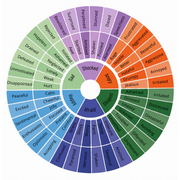
A classic feelings wheel
The full wheel, with every feeling in one place.
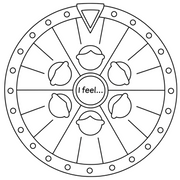
A blank wheel to design
Your child writes their own feeling words and draws the faces.
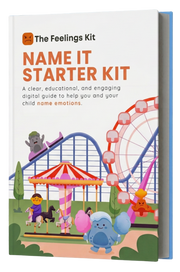
A guide for you
What to say, how to start, and answers to common worries.
Try it now
Tap a big feeling
This is how the wheels work: start with a big feeling, then find the word that fits best.

Tap a feeling on the wheel
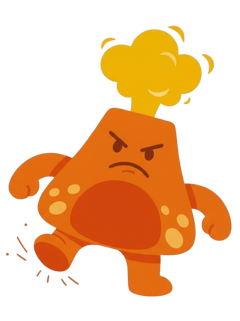


You picked
Angry
Every feeling is welcome on the wheel.
Which word fits best?
I feel because…
From the guide: “The goal isn’t to find the perfect word.” It’s about helping your child notice and name what’s happening inside.
Get all 8 wheels free
The full guide
A 30-minute read, packed with what to say and when to say it.

For you, the grown-up
A short guide that shows you what to say
- 1
Have the wheel ready
Print the right level and keep it where your child can see and reach it.
- 2
Introduce it
Simple words to use, so the wheel feels like a helpful friend, not a test.
- 3
Start with a calm check-in
Try it first in happy, playful moments, not only when they’re upset.
- 4
Help them say it
Turn the feeling into a sentence: “I feel … because …”
- 5
Take supportive action
Work out together what would help next.
Plus answers to the questions parents ask, like what to do in a meltdown or when your child picks the same feeling every time.
Send me the guide and wheels
The Feelings Kit Family
Who made it
Written by a Children’s Wellbeing Practitioner
Caitlin wrote every wheel and every page of the guide, drawing on her work supporting children’s wellbeing. Jake checked the research behind it. Together, we built the kit we wished every family had.
- A feeling with a name is easier to handle. Studies show that putting a feeling into words helps calm the brain’s alarm response. It’s sometimes called “name it to tame it”.
- It’s the first building block. Before a child can calm down, cope or explain what’s wrong, they need to know what they’re feeling. Children who can recognise and name emotions early tend to get on better with others later on.
Questions
What parents ask us
Still wondering about something? Message us on Instagram and we’ll do our best to help.
Is it really free?
Yes. Pop your email in and we’ll send the kit straight to your inbox. After that, you’ll get occasional emails from us with ideas for using it, and you can unsubscribe at any time.
What ages is it for?
Children aged 3 to 12. The three levels let your child start with a few big feelings and move up to finer words when they’re ready.
Do I need a printer?
No. You can use the wheels on a phone, tablet or computer. The guide suggests printing your child’s wheel and keeping it somewhere they can see and reach, like a calm-down corner.
Should we use the wheel during a meltdown?
The guide explains why it’s most helpful once your child is calm, when it can gently help them make sense of what they felt.
What if my child picks the “wrong” feeling?
There’s no wrong answer. What matters is that your child is starting to notice and name their feelings. The guide has gentle ways to offer new words.
Can I share it with my child’s teacher?
Yes, please do. You’re welcome to pass it on to teachers or anyone else who supports your child.
Is it right for my child?
Every child is different. The wheels are visual, with no right or wrong answers, so you can go at your child’s pace. The kit isn’t a substitute for professional support. If big feelings are affecting daily life, talk to your GP or your child’s school.
Step one is free
Start by naming the feeling
8 printable feelings wheels and a short guide for you, sent straight to your inbox.
